
Author: Christine Skirbunt
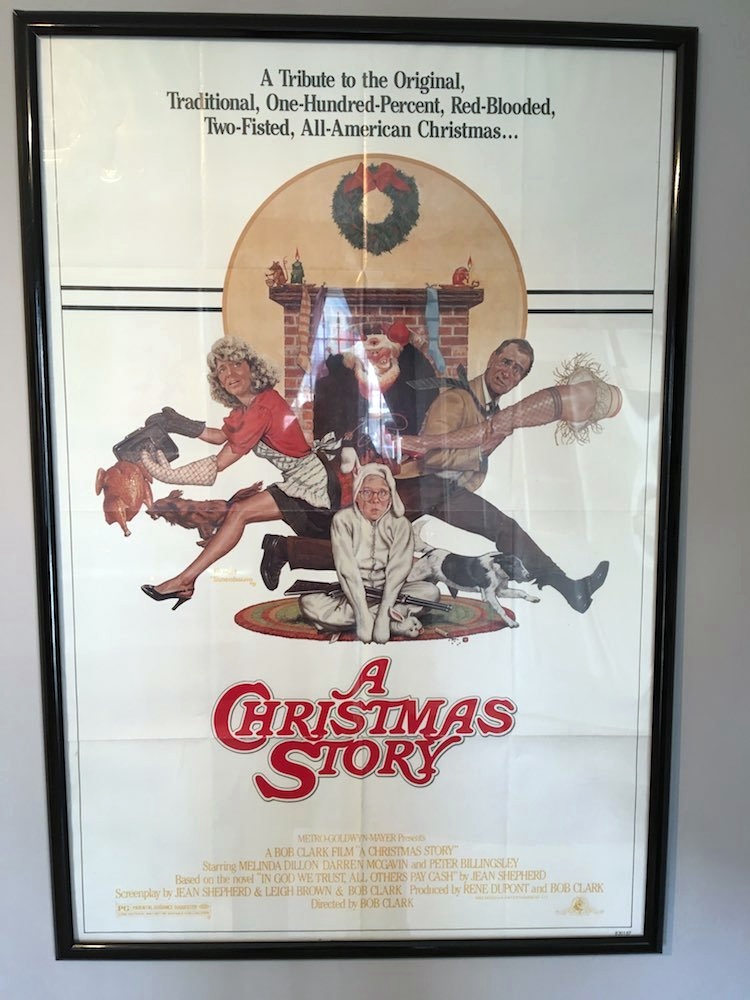
Few holiday films have woven themselves into the fabric of American Christmas quite like A Christmas Story (1983). Directed by Bob Clark and based on humorist Jean Shepherd’s semi-autobiographical stories, over time, its nostalgic humor, dry wit, and pitch-perfect depiction of early 1940s life transformed it into an enduring classic. So beloved is the film that it was selected by The Library of Congress for preservation in the National Film Registry in 2012 for being “culturally, historically, or aesthetically significant.”
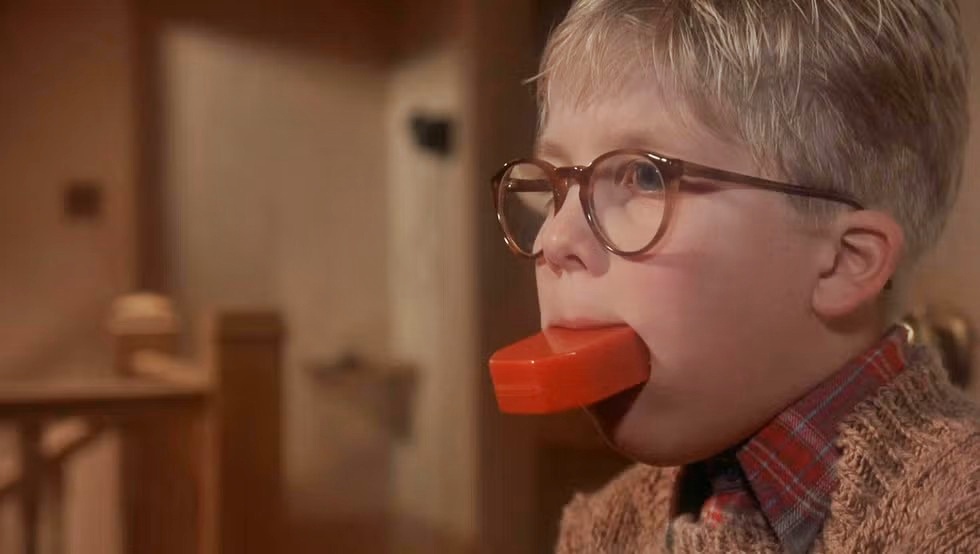
Made for only $4 million, it was a sleeper hit that grossed $18 million in the U.S. and earned Clark two Genie Awards (the Canadian equivalent of an Academy Award, today known as the Canadian Screen Awards) for Best Director and Best Screenplay. By the late 1990s, TNT and TBS began their now-famous 24-hour Christmas Eve and Christmas Day A Christmas Story marathon, ensuring that main character, Ralphie Parker (played by Peter Billingsley), his BB gun, and the Leg Lamp would forever shine in American living rooms. That traditional marathon continues on to this day even in the age of streaming on-demand viewing.Narrated by the author, Jean Shepherd, A Christmas Story captures the wonder and absurdity of childhood in the Midwest in the early 1940s. But at its heart, it is not about gifts or “major awards.” It’s about family, nostalgia, and the resilient joy that comes when the perfect holiday goes sideways. And no moment captures that better than the film’s closing sequence: the ruined Christmas dinner saved by Chinese food.
The Turkey Tragedy and the Dinner That Saved Christmas
The Parker family’s Christmas Day begins in harmony as presents are unwrapped, wrapping paper litters the floor, and the father (aka: The Old Man), played by Darren McGavin, eyes the roast turkey with delightful impatience. But before the mother, as portrayed by Melinda Dillon, can even finish cooking the bird, calamity strikes. The Bumpus’ dogs, the neighbor’s near-feral pack of hound dogs, charge through the kitchen and devour the turkey in mere seconds.
The silence that follows is tragicomic, punctuated only by the mother’s crying. Then, in a burst of resigned take-charge optimism, The Old Man declares, “All right. Everybody upstairs. Get dressed. We are going out to eat!”
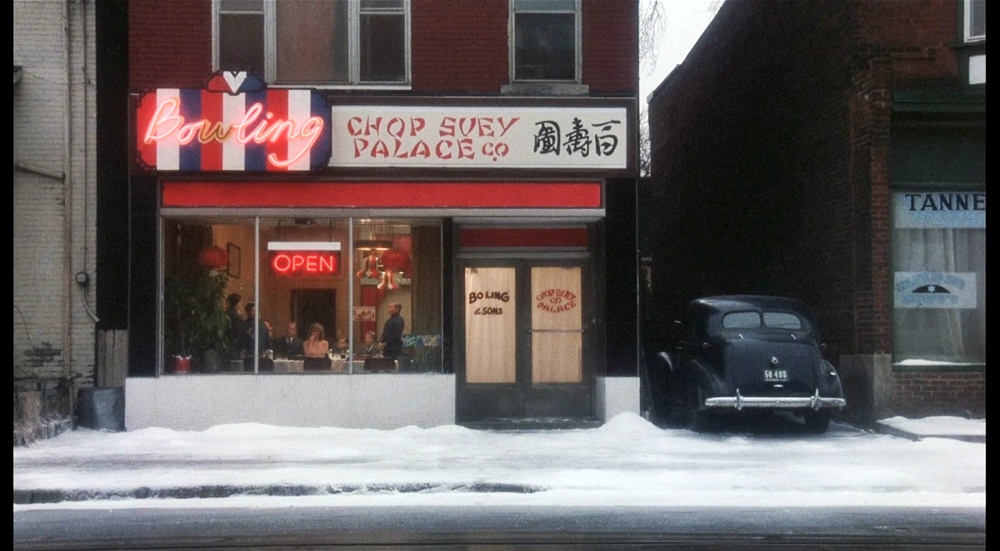
Their destination: the Bo’ Ling Chop Suey Palace, one of the few restaurants open on Christmas Day. What follows is a lone family gathered in a Chinese restaurant, as amusing renditions of Christmas carols are sung by the Chinese waitstaff, and a whole roast duck is presented with its head still attached. This scene has become one of cinema’s most beloved endings.
Stepping Into 1940 America
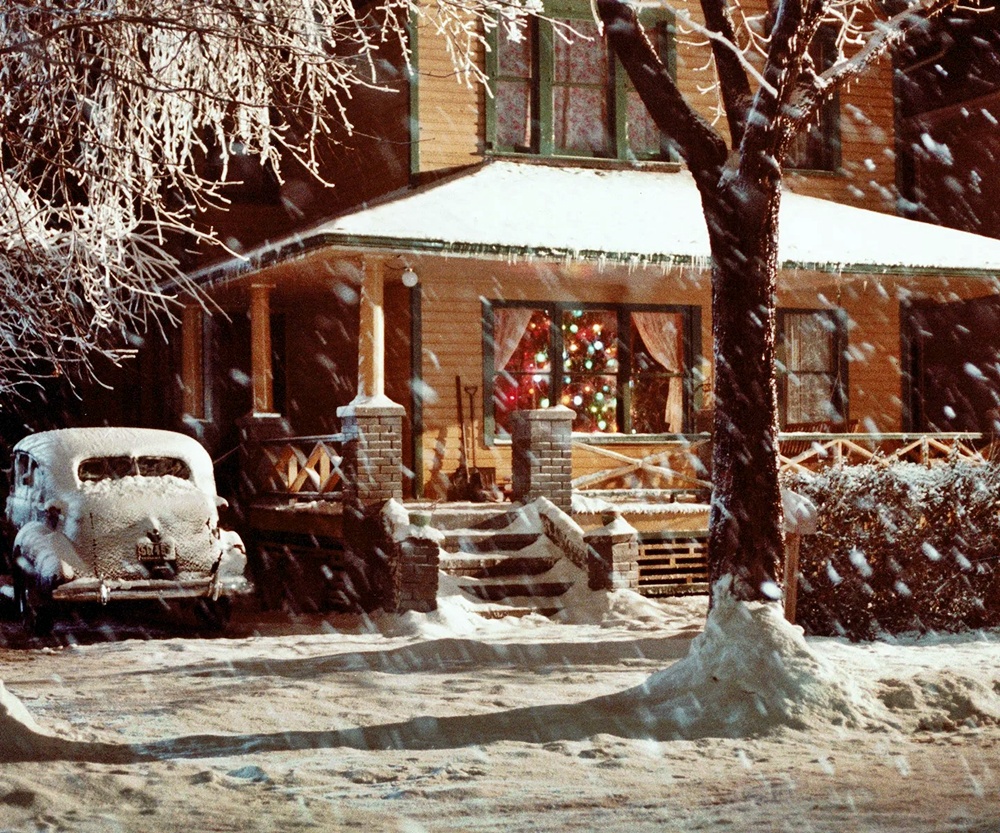
Though A Christmas Story was released in 1983, it is set around 1939–1940 and uses that time period backdrop to illustrate simpler times. Those years were a crossroads for the American home: the Depression was ending, World War II, already a reality in Europe, had not yet come to the U.S., and families were rediscovering comforts lost for many during the Great Depression, such as home ownership, department-store shopping, and the beautiful magic of Christmas.
The film takes place in a fictional mid-sized town called Hohman in Indiana and evokes the warmth of post-Depression Midwestern life. The Parker family home is a two-story yellow house with a coal furnace that groans ominously and perfectly reflects the blue-collar middle-class of the era. Inside the home it is period-accurate down to the smallest detail, mirroring how most American families decorated on a budget.
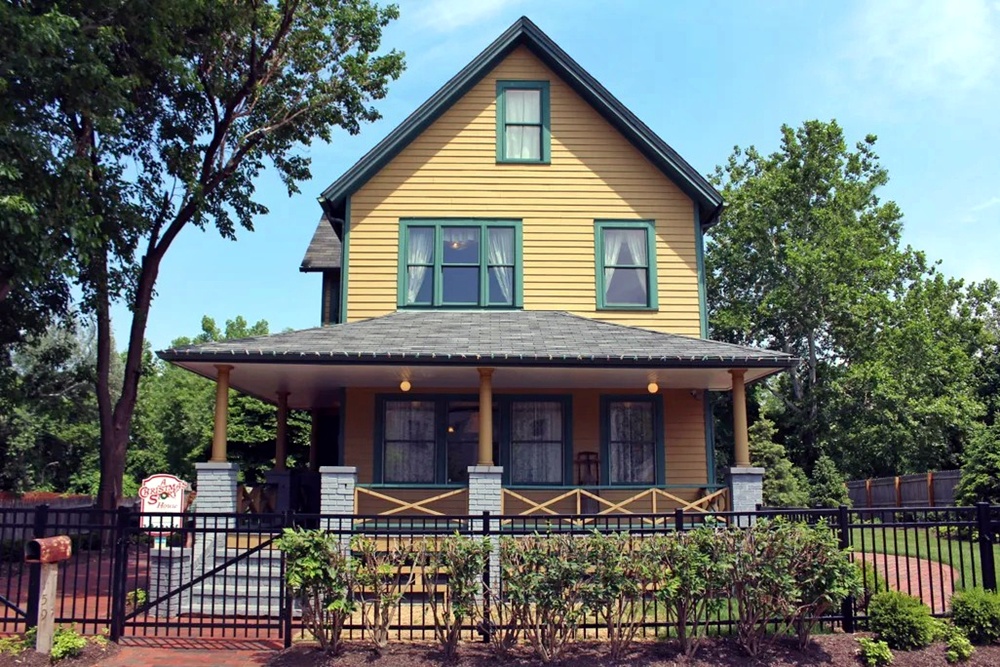
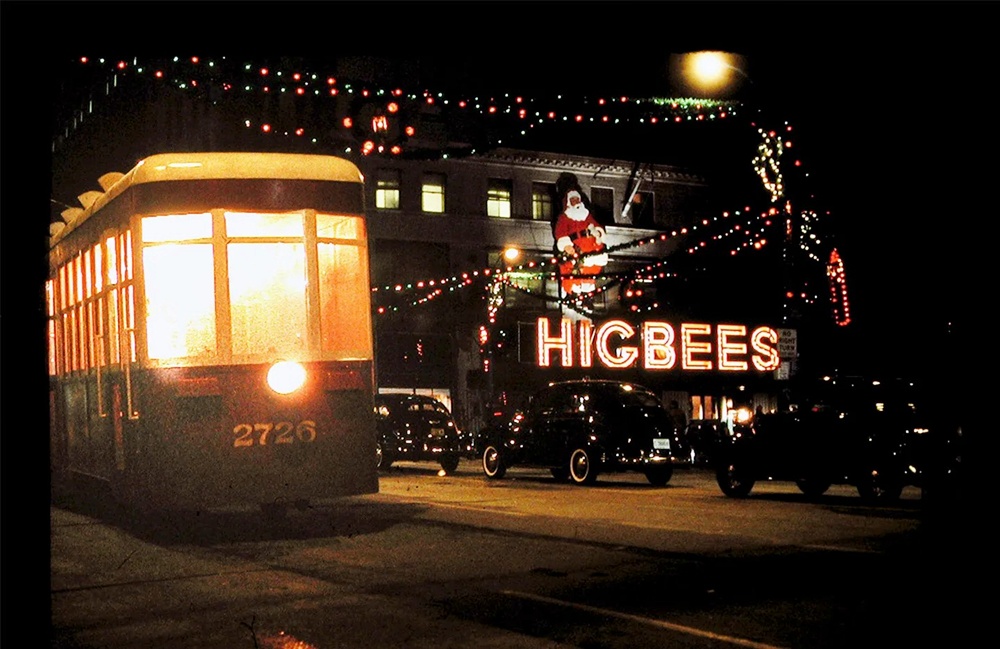
Director Clark anchored that feeling by filming in Cleveland, Ohio. He visited more than 20 cities looking for both the perfect house and a vintage department store. After Clark sent letters to about 100 department stores in America asking to film interior and exterior scenes, only Cleveland’s Higbee’s responded granting permission. Thus, Hohman was found and Higbee’s Department Store downtown became the movie’s centerpiece. To thank the city of Cleveland, the producers named the street Ralphie lives on “Cleveland Street.”
Every set detail was researched: coal furnaces, linoleum floors, lace curtains, and tree lights that glowed with the soft, uneven warmth of prewar bulbs. The result is a living time capsule of a middle-class Midwestern Christmas.
The Look of the Era: Fashions Done Right
Costume designer Mary McLeod rooted the film’s wardrobe firmly in late American 1930s and early 1940’s fashion by using authentic period garments and patterns. Ralphie’s mother sports floral housedresses, knit cardigans, and the ever-present uniform of countless American homemakers: an apron. Her frizzy curls and natural makeup echo the understated beauty trends of the time.
The Old Man wears a fedora and wool overcoat that mark him as a working-class man proud of his place in society. He’s the kind of father who fixes his own furnace and battles his own demons (in this case, the Bumpus hounds and a temperamental heating element).
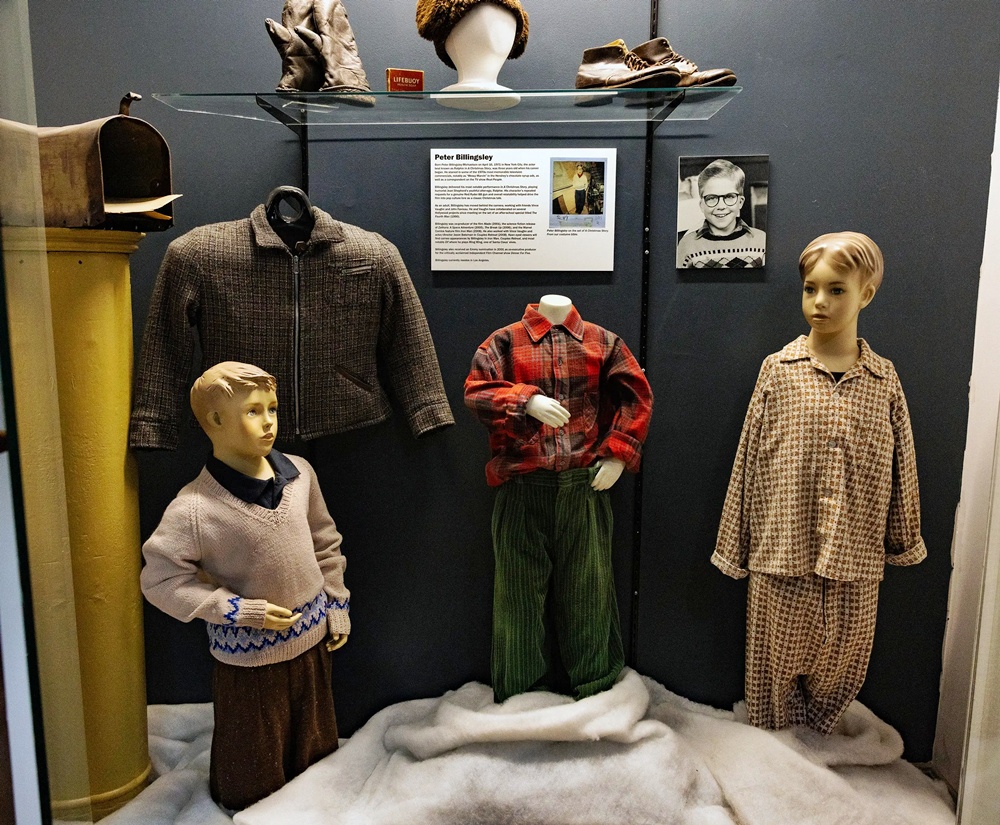
Even Ralphie’s Red Ryder BB Gun daydream costume showcases these mid-century archetypes, highlighting how pop culture and advertising shaped children’s imaginations long before television dominated.
The Department Store: America’s Christmas Cathedral
When Ralphie looks spellbound into the glittering window of Higbee’s, dreaming of his own Red Ryder BB Gun, he’s not just a boy longing for a toy: he’s a portrait of a generation. In the 1930s and 1940s, department stores were the cathedrals of Christmas. Cities from Cleveland to New York City transformed their display windows into moving dioramas of elves, snowflakes, and trains to draw in customers.
Families would bundle up and marvel at the store window displays before heading inside to see Santa. Higbee’s, where the film shot its iconic scenes of the Santa slide, mirror the store’s real-life SantaLand-esque window displays that were well-known throughout Ohio.
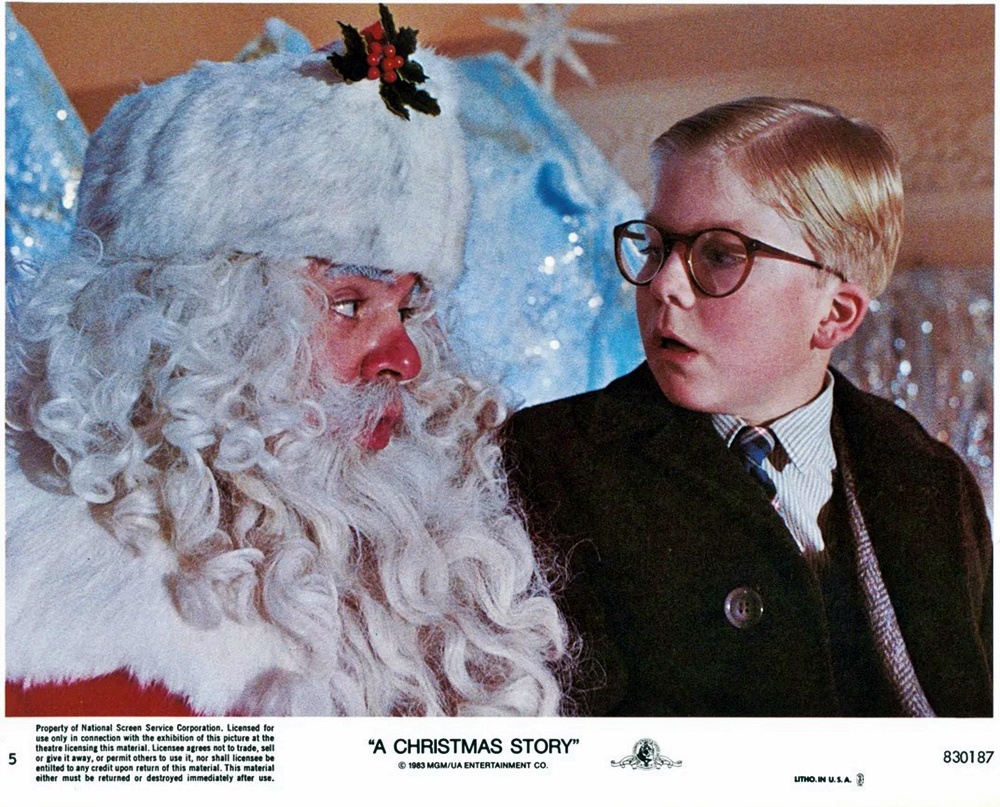
These sequences in the film are pure Americana with the clang of cash registers and the throngs of shoppers in period attire. They perfectly encapsulate what made Christmas shopping an event, not just an errand.
The Leg Lamp: A Symbol of Pride
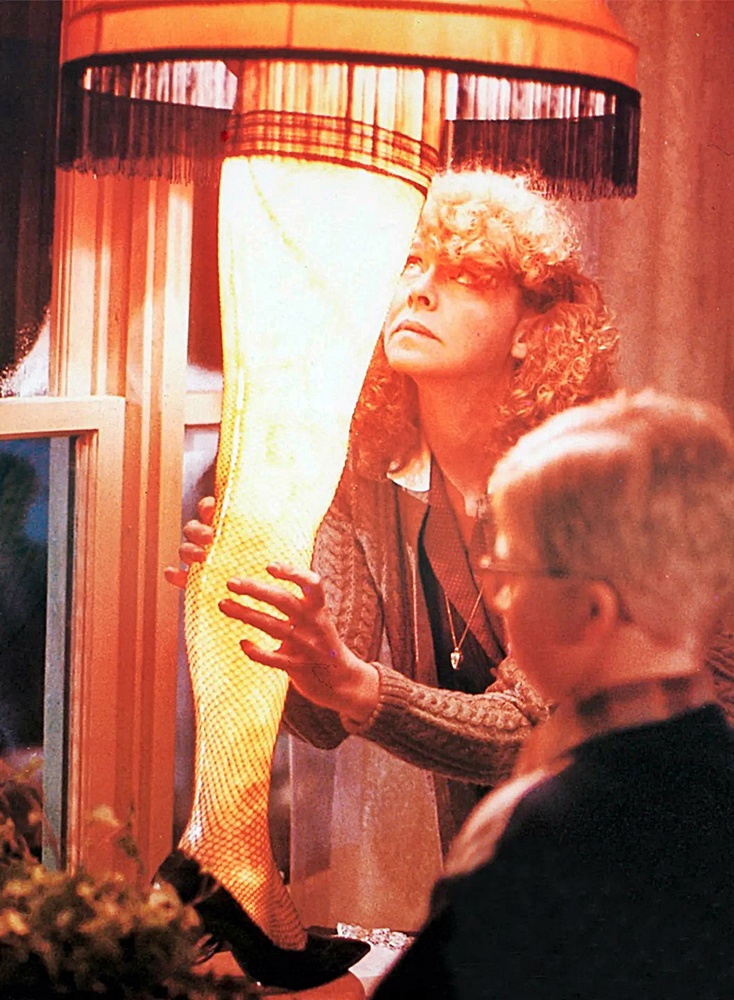
No object in A Christmas Story captures the eccentric charm of Americana better than the Leg Lamp: The Old Man’s infamous “major award” that arrives in a wooden crate marked FRAGILE (“Fra-gee-lay… must be Italian!”). Shaped like a woman’s attractive leg clad in fishnet stockings and topped with a fringed lampshade, it’s both absurd and iconic.
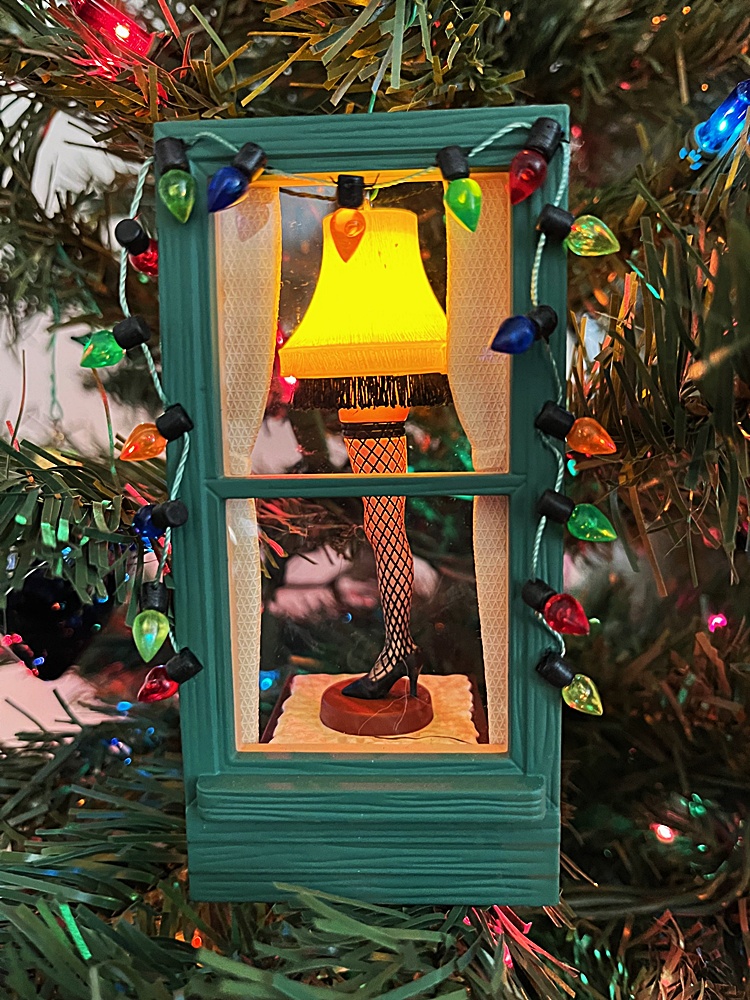
For the Old Man, it represents victory and tangible proof of his “mind powers” at newspaper crossword puzzles. He proudly displays it in the front window, basking in “art.” For Ralphie’s mother, however, it’s an eyesore and a tasteless embarrassment – certainly not appropriate for a household with two young boys. When the lamp “accidentally” breaks, her expression is barely contained satisfaction, leaving audiences to debate for decades whether it was truly an accident or a quiet act of rebellion.
Today, the Leg Lamp has become a cultural shorthand for A Christmas Story itself. From full-size replicas glowing in windows across America, to ornaments, mugs, and even nightlights, the lamp’s kitschy charm endures. It’s both a parody and a tribute, a wink at the over-the-top nostalgia that makes the film so beloved.
The Chop Suey Palace: Where Christmas Was Saved
After the turkey’s tragic demise, the Parkers’ decision to eat at Bo’ Ling’s Chop Suey Palace is historically perfect. By the late 1930s, Chinese-American restaurants were fixtures in cities and towns across the U.S. “Chop suey” was among America’s first nationwide “ethnic” dishes, adapted to local tastes but still proudly Chinese. And importantly, Chinese restaurants were often open on Christmas Day, serving Jewish and gentile diners alike when other eateries were closed. That makes the Parkers’ outing both plausible and beautifully symbolic: a family embracing something new when tradition fails.
When the waiter presents the whole roast duck with the head intact, Mrs. Parker’s shriek and Ralphie’s smile as he tries to get a closer look carry cultural humor that still lands today. Serving poultry whole is a mark of celebration in Chinese cuisine and other parts of the world. For the Chinese, it symbolizes family togetherness and prosperity. But the Parker’s reaction is unmistakenly American as we further disconnect farm from plate. Still, undaunted, The Old Man declares it perfect except for the duck “smiling at me” at which point the waiter takes a cleaver and nonchalantly chops the offending head off and sticks it in his pocket. The family applauds and while their dinner may not be traditional, it’s wrapped by warmth, community, and a shared meal. What could be more American?
The Parkers’ “Chinese turkey” has become its own slice of holiday folklore. Across the country, families who’ve watched the film joke about going to a Chinese restaurant instead of preparing a meal at home while some go as far as to actually make it a reality or a yearly tradition. Food historians trace this phenomenon directly to the movie’s influence. The Parkers’ Chinese restaurant meal has become so iconic that it’s now part of the American Christmas lexicon, celebrated in themed dinners and restaurant specials across the country. What began as comic relief has become an emblem of American adaptability.
1940 vs. 1983 vs. Today
What makes A Christmas Story timeless is how “right” it gets the emotional and social texture of its period. The neighborhood kids bundled up in layers so thick they can barely move, the crowded downtown stores, the picking out of a live Christmas tree all evokes the early 1940s American experience.
But no period film is perfect. There is no escaping that the accent gag of the Chinese waitstaff singing “fa-ra-ra-ra-ra” may have played for laughs in 1983, but today it reflects outdated stereotypes. However, modern stage versions, like A Christmas Story Live! (2017), omitted the accent while trying to keep the humor but something was lost and the live version did not meet with remarkable success. So, perhaps it behooves one to remember the period from which a film was made and the era it represents.
And it should be noted this stylization does not have to detract from the film’s intended warmth. If anything, it reminds us that A Christmas Story was never meant to be a documentary but rather, it’s a memory, lovingly exaggerated as told through a child’s eyes.
A True Piece of Americana
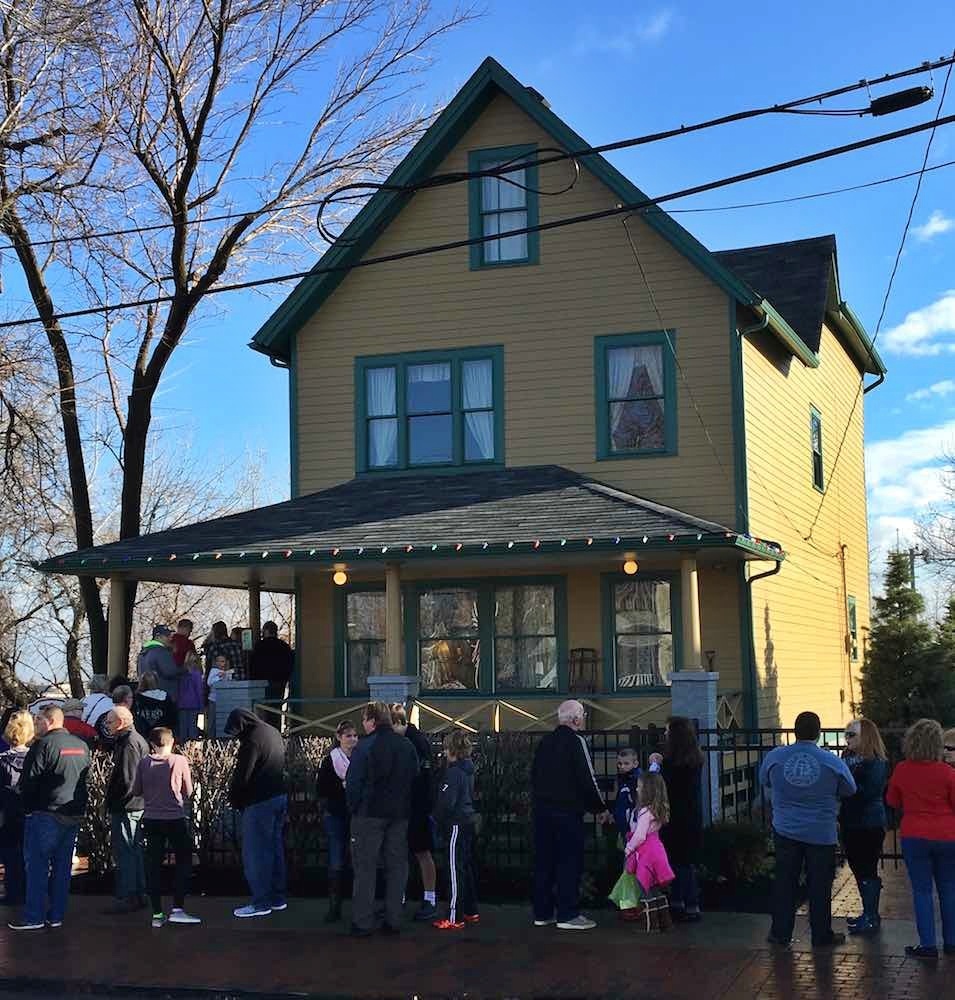
So iconic is the film, that beyond 24-hour Christmas marathons, at 3159 West 11 Street in Cleveland, Ohio is A Christmas Story House where some of the film’s scenes were shot. Across the road from it is A Christmas Story Museum and Gift Shop. The house and museum opened to the public on November 25, 2006, with original cast even attending the grand opening. During its opening weekend, the House and Museum drew 4,300 visitors, and since then tens of thousands of fans have visited.
A Christmas Story endures because it never tries too hard. It is not about picture-perfect families or heavenly miracles, but rather it’s about the little misadventures, the odd gifts, and the messy dinners that make up real American Christmases. From the Leg Lamp’s glow to the Chop Suey Palace’s laughter, it celebrates the humor and humanity of imperfection.
Every December, as we watch the Parkers applaud their dinner in the Chop Suey Palace, we’re reminded that the perfect Christmas isn’t the one we plan: it’s the one we make together.
“A Christmas Story.” https://www.tcm.com/articles/12734/a-christmas-story
“A Christmas Story House: Home of a Holiday Classic.” https://clevelandhistorical.org/items/show/753
“‘A Christmas Story Live!’ Changed That Racist Chinese Restaurant Scene.” https://www.eater.com/2017/12/18/16790098/a-christmas-story-live-chinese-restaurant-scene
“A Christmas Story Marathon Kicks Off On TBS This Christmas Eve.” https://www.cinemablend.com/television/Christmas-Story-Marathon-Kicks-Off-TBS-Christmas-Eve-37908.html
Images:
- Xmas Story Chop Suey Palace: https://www.reddit.com/r/MovieDetails/comments/edc6d9/the_chinese_restaurant_at_the_end_of_a_christmas/
- Xmas Story Costumes at Museum: https://housefromachristmasstory.com/
- Xmas Story Higbees: https://www.vanityfair.com/hollywood/2016/11/how-a-christmas-story-became-an-american-tradition
- Xmas Story House End Credits: https://www.vanityfair.com/hollywood/2016/11/how-a-christmas-story-became-an-american-tradition
- Xmas Story House with Tourists: https://clevelandhistorical.org/items/show/753
- Xmas Story House: https://www.smithsonianmag.com/travel/you-can-now-buy-ralphie-parkers-house-from-a-christmas-story-180981146/
- Xmas Story Leg Lamp Ornament: Author’s Collection
- Xmas Story Mother and Ralphie Leg Lamp: https://www.vanityfair.com/hollywood/2016/11/how-a-christmas-story-became-an-american-tradition
- Xmas Story Original Movie Poster: https://clevelandhistorical.org/items/show/753
- Xmas Story Ralphie with Life Buoy: https://www.caranddriver.com/features/a42169056/a-christmas-story-movie-oldsmobile-still-going-strong/
- Xmas Story Ralphie with Santa: https://www.smithsonianmag.com/travel/you-can-now-buy-ralphie-parkers-house-from-a-christmas-story-180981146/
Further Reading:
“House From A Christmas Story.” https://housefromachristmasstory.com/
“How A Christmas Story Went from Low-Budget Fluke to an American Tradition.” https://www.vanityfair.com/hollywood/2016/11/how-a-christmas-story-became-an-american-tradition
“The Oldsmobile from ‘A Christmas Story’ Is Still Going Strong.” https://www.caranddriver.com/features/a42169056/a-christmas-story-movie-oldsmobile-still-going-strong/
“You Can Now Buy Ralphie Parker’s House From ‘A Christmas Story’.” https://www.smithsonianmag.com/travel/you-can-now-buy-ralphie-parkers-house-from-a-christmas-story-180981146/

Leave A Comment